Modern Bachata: Where Tradition Meets Urban and Contemporary Dance
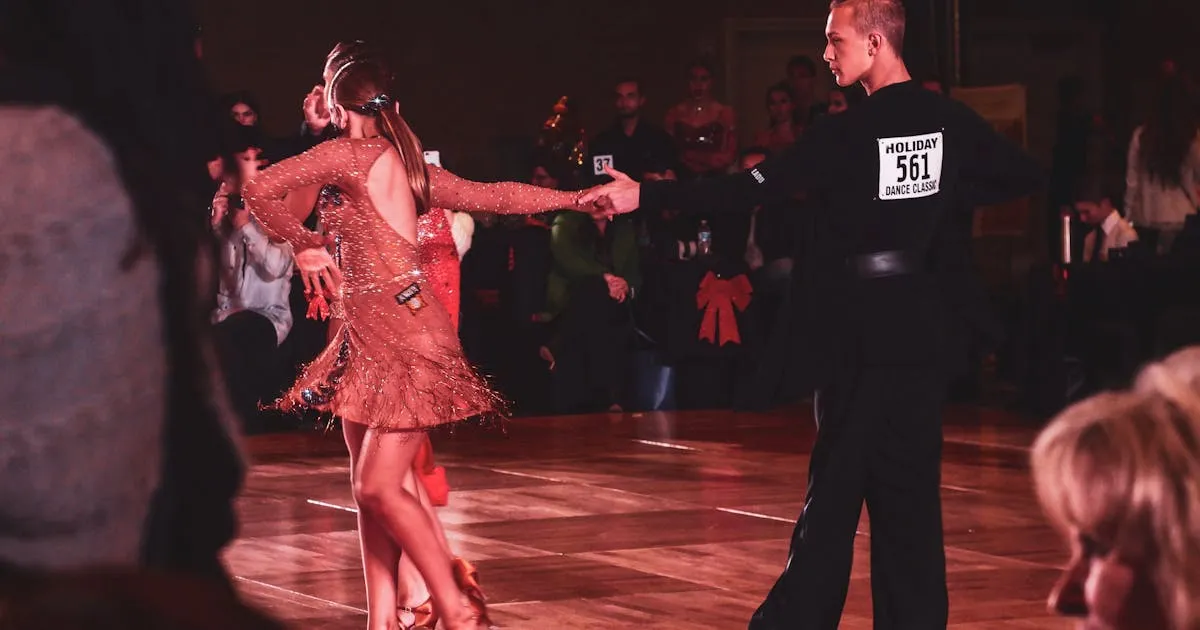
Modern Bachata is the newest and most eclectic of the three major bachata substyles — a creative fusion that takes the partnered framework of bachata and injects it with influences from hip-hop, contemporary dance, and urban movement culture. It's the style that pushes boundaries, borrows freely, and isn't afraid to break the "rules" of what bachata is supposed to look like.
Origin and History
Modern Bachata doesn't have a single origin point or founding couple the way Sensual Bachata does. Instead, it emerged organically during the 2010s as a new generation of dancers — many of whom had backgrounds in hip-hop, commercial dance, or contemporary styles before discovering bachata — began blending their existing movement vocabulary with bachata's basic structure.
Key figures in shaping the style include dancers like Carlos Espinosa and María Angeles, as well as numerous dancers across Europe and Latin America who began incorporating urban grooves, contemporary lines, and theatrical elements into their bachata. Social media played a huge role in spreading Modern Bachata, with short demo videos showcasing eye-catching combinations that mixed bachata with movements audiences had never seen in a Latin dance context before.
Key Characteristics and Movement Style
Modern Bachata is defined by its willingness to incorporate movement from outside the traditional bachata world. You'll see hip-hop grooves in the body, contemporary dance lines and extensions, musicality hits borrowed from urban choreography, and moments of theatrical expression. Footwork can range from simple to complex, and body movement is used selectively rather than as the constant foundation it is in Sensual Bachata.
The dance frequently plays with levels — drops to the floor, sweeping extensions, sudden freezes — and often incorporates shadow position (both partners facing the same direction) and open-hold work that gives each dancer space for individual styling.
Music and Rhythm
Modern Bachata dancers are perhaps the least genre-restricted of all bachata substyles. While they certainly dance to bachata music — particularly modern bachata tracks with pop, R&B, or electronic influences — Modern Bachata also thrives on bachata remixes of mainstream songs, slow urban tracks, and hybrid productions that blend bachata rhythm with contemporary pop sensibilities.
Where It's Most Popular
Modern Bachata has its strongest following in Europe — particularly in Spain, France, Italy, and the Netherlands — where the large and well-organized congress circuit gives dancers regular opportunities to learn and social dance. It's growing steadily in South Korea, Russia, and parts of Latin America as well. Online, Modern Bachata punches well above its weight — its visually dynamic combinations perform exceptionally well on social media, attracting new dancers to the style.
How It Differs from Other Bachata Substyles
The clearest distinction between Modern Bachata and Dominican Bachata is the movement vocabulary. Dominican Bachata draws exclusively from its own tradition — the footwork, the bounce, the rhythmic play are all authentically Dominican. Modern Bachata, by contrast, is a deliberate fusion, pulling movement ideas from wherever it finds them and integrating them into a bachata framework.
Compared to Sensual Bachata, Modern Bachata is less focused on the intimate body-movement connection between partners and more focused on dynamic, visually striking movement. Where Sensual Bachata is inward-looking, Modern Bachata is more outward-facing, with a performance quality and stylistic diversity that makes each dancer's individual flavor a bigger part of the equation.