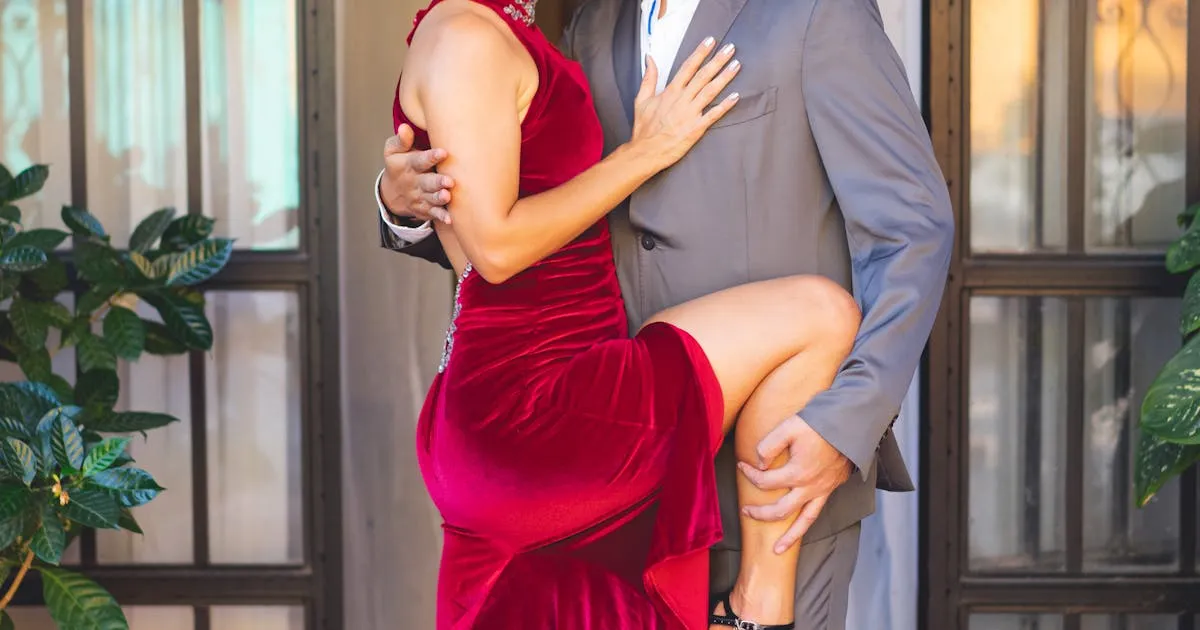
Bachata is a partner dance that originated in the Dominican Republic. Known for its romantic feel, approachable basic step, and sensual body movement, it has become one of the most popular social dances worldwide. Whether you have never set foot on a dance floor or you already dance salsa, Kizomba, or another social dance and want to branch out, Bachata is one of the most rewarding dances to learn. This guide covers everything you need to know — from its history and styles to practical advice on finding your first social.
Table of Contents
- Where Did Bachata Come From?
- How Do You Dance the Bachata Basic Step?
- What Are the Different Styles of Bachata?
- What Does Bachata Music Sound Like?
- How Do I Find My First Bachata Social?
- Where Can You Dance Bachata Around the World?
- What Are the Best Bachata Festivals?
- What Should You Wear to a Bachata Social?
- Frequently Asked Questions
Where Did Bachata Come From?
Bachata was born in the barrios of the Dominican Republic in the early 1960s. It grew out of bolero and son traditions, played on acoustic guitars in bars, backyards, and street corners. The music was raw and melancholic — songs about heartbreak, poverty, and unrequited love. The upper classes dismissed it as “musica de amargue” (music of bitterness), and radio stations refused to play it. For decades, Bachata existed almost entirely in working-class communities and rural areas. It was the people’s music, passed along through informal gatherings rather than concert halls or recording studios.
Jose Manuel Calderon is widely credited with recording the first Bachata track in the early 1960s, though the term “Bachata” was not consistently used to describe the genre until later. Throughout the 1970s and 80s, artists like Luis Segura, Leonardo Paniagua, and Blas Duran pushed the music forward, experimenting with electric guitar and more direct lyrical themes. Blas Duran’s introduction of the electric guitar in the mid-1980s was a turning point — it gave Bachata a sharper, more modern edge that would define the sound going forward.
That broader shift toward mainstream acceptance began in the 1990s. Juan Luis Guerra, already a Dominican superstar for his merengue music, released “Bachata Rosa” in 1990. The album sold millions of copies internationally and gave Bachata its first taste of respectability. Suddenly, a style of music that had been stigmatized for 30 years was being played on radio stations across Latin America and beyond. Guerra proved that Bachata could be sophisticated without losing its soul.
The real global explosion came in the 2000s. Aventura, a group from the Bronx led by Romeo Santos, fused traditional Bachata guitar with R&B, hip-hop, and pop production. Their 2002 hit “Obsesion” reached number one in multiple European countries and introduced Bachata to audiences who had never heard it before. Prince Royce followed with a smoother, pop-forward sound that brought even more listeners to the genre.
At the same time, dance schools in Europe and North America began teaching Bachata alongside salsa. The dance was easier to pick up than salsa for many beginners, and the romantic music appealed to a broad audience. By the 2010s, Bachata had its own dedicated events, festivals, and international congress circuit. Today, you can find Bachata socials in virtually every major city on every continent. The best cities for Bachata in Latin America remain strong, but so do scenes in Europe, Asia, and beyond. A dance that was once confined to Dominican barrios is now a global phenomenon with millions of dancers worldwide.
How Do You Dance the Bachata Basic Step?
The Bachata basic step is a simple side-to-side pattern: three steps to one side followed by a tap, then three steps back and another tap. This 8-count pattern is done in place with a partner, typically in a close or semi-close hold. What makes Bachata uniquely accessible is that this basic step can be learned in minutes, even if you have never danced before.
The timing goes like this: step left on count 1, step left on count 2, step left on count 3, tap your right foot on count 4. Then reverse — step right on count 5, step right on count 6, step right on count 7, tap your left foot on count 8. That tap on counts 4 and 8 is where the hip movement happens. It is not something you need to force. As you get comfortable with the rhythm, the hip pop develops naturally.
A few details that make the basic feel better from day one. Keep your steps small — beginners almost always take steps that are too wide, which throws off balance and makes it harder to stay connected with your partner. Stay on the balls of your feet rather than planting your heels, which keeps you light and ready to move. Your knees should be slightly bent, never locked. And your upper body stays relatively calm while the movement happens in your hips and legs.
The hold is important too. In a basic closed hold, the lead places their right hand on the follower’s shoulder blade (not the lower back — that comes later in closer connection styles). The follower rests their left hand on the lead’s shoulder or bicep. Your free hands connect palm to palm at roughly shoulder height. Keep the frame relaxed — a tense frame makes everything harder for both partners.
Once you have the basic step down, everything else builds on top of it. Turns, body rolls, dips, and musicality all come from the same foundational rhythm. The simplicity of the basic is what makes Bachata so addictive — you can start dancing socially after a single class, and you will keep discovering new layers for years.
One practical tip: practice the basic step at home before your first class. Put on a Bachata track, find the beat, and just step side to side. Even five minutes of this will make your first lesson significantly more comfortable.
What Are the Different Styles of Bachata?
Dominican Bachata
Dominican Bachata is the original style and the closest to how the dance has been done in the Dominican Republic for decades. It is characterized by intricate footwork, syncopations, and playful improvisation. Dancers stay close to the ground with quick, light feet and a relaxed upper body. The hold tends to be more open, giving both partners room to play with footwork independently.
What makes Dominican Bachata distinct is its emphasis on musicality — matching your footwork to the guitar patterns, hitting the bongo accents, and responding to the specific song rather than following a choreographed pattern. The footwork can get genuinely complex, with rapid-fire syncopations and sudden pauses that play against the beat. It has a spontaneous, joyful energy that is hard to replicate in other styles. If you visit Santo Domingo, you will see this style danced in its purest form at local colmados and dance halls.
Dominican Bachata can be harder to find at international socials outside of Latin America, but it has been growing in popularity as more dancers seek out the roots of the dance. Look for workshops specifically labeled “Dominican Bachata” or “Bachata Dominicana” at festivals and congresses.
Sensual Bachata
Sensual Bachata was developed in Cadiz, Spain, in the mid-2000s by dancers like Korke and Judith. It takes the basic Bachata step and adds body waves, isolations, head rolls, and close-connection movements between partners. The emphasis is on flowing, continuous movement and interpreting the emotion of the music through the body rather than the feet.
This is the style you will see most often at international socials and festivals. It works particularly well with modern, slower Bachata tracks that have long melodic phrases and emotional builds. Madrid and Barcelona remain two of the strongest cities for Sensual Bachata, given its Spanish origins, but the style has spread worldwide and dominates social floors from London to New York. If you are curious about the UK scene specifically, Sensual Bachata is by far the most popular style there.
Sensual Bachata requires more body awareness than Dominican style. You will spend time developing isolations — the ability to move one part of your body (chest, hips, head) independently of the rest. Body waves, where movement ripples through your torso from top to bottom or bottom to top, are a signature element. If you are brand new, expect these skills to take some practice. They are not something most people can do well on day one. That said, even basic Sensual Bachata looks and feels great once you have the fundamentals down, and the close connection makes it deeply satisfying to dance.
Modern / Urban Bachata
Modern Bachata (sometimes called Urban Bachata) is a fusion style that incorporates elements from hip-hop, zouk, contemporary dance, and even urban kiz. It is often danced to remixed Bachata tracks or to songs that blend Bachata rhythms with pop, trap, or electronic production.
The movement vocabulary is broader than traditional styles. You might see dips, tricks, shadow positions, and musicality breaks that would not appear in Dominican or Sensual Bachata. Leads and followers switch roles more freely, and there is more emphasis on visual impact and creativity. The style is popular among younger dancers and on social media, where Bachata videos routinely go viral. It continues to evolve rapidly, borrowing from whatever other dance styles are trending.
If you enjoy creative expression and are not too concerned about stylistic purity, Modern Bachata is a lot of fun. Just be aware that some of the flashier moves you see online require significant training and should not be attempted at a social without proper instruction. Start with the basics, and the flashier elements will come with time.
What Does Bachata Music Sound Like?
Bachata music is built around the guitar. In a traditional Bachata band, the lead guitar (requinto) plays the melodic lines while a rhythm guitar provides the harmonic foundation. Add bongos, guira (a metal scraper), and bass guitar, and you have the classic Bachata sound. That guitar tone — bright, slightly tinny, and deeply expressive — is what makes Bachata music instantly recognizable. Once you know the sound, you will start hearing it everywhere.
Traditional Bachata has a melancholic, romantic quality. The songs are almost always about love — finding it, losing it, longing for it. Artists to explore include Jose Manuel Calderon (widely considered the first Bachata recording artist), Luis Segura, Raulin Rodriguez, Antony Santos, and Frank Reyes (often called “El Principe de la Bachata”). These tracks have a raw, stripped-down feel with the guitar front and center. If you want to understand where the dance came from emotionally, traditional Bachata is where to start.
Modern Bachata blends the traditional guitar sound with pop, R&B, and electronic production. Romeo Santos, both as a solo artist and as the frontman of Aventura, is the biggest name in this space. His music is lush, polished, and designed for both listening and dancing. Prince Royce brings a smoother, more pop-oriented approach. Daniel Santacruz, Dani J, and DJ Tronky produce tracks that are staples on social dance floors. Newer artists like Natti Natasha and Manuel Turizo have brought Bachata elements into mainstream Latin pop, further expanding the genre’s reach. DJ remixes — where producers take popular pop or R&B songs and add a Bachata beat — are also extremely common at socials and have become a genre of their own.
What to listen for when dancing: the rhythm is in 4/4 time, and the basic step follows an 8-count phrase. The bongo pattern and the bass line give you the timing. The guitar accents often land on the 4 and 8 — the same counts where you tap and pop your hip. The derecho (a driving bongo pattern) signals higher energy sections, while softer guitar passages call for closer connection and more body movement. Once you start hearing those accents, the music and the movement start to feel like one thing.
Before your first social, spend some time with a Bachata playlist. You do not need to study the music academically. Just let it play while you cook, commute, or relax. When the songs come on at the social, your body will already know the rhythm, and that familiarity makes a huge difference.
How Do I Find My First Bachata Social?
Bachata socials are almost always combined with salsa nights. Most events alternate between salsa and Bachata tracks, so you will hear both throughout the evening. Some events lean heavier toward Bachata, and a growing number are Bachata-only — but mixed Latin socials are still the most common format. If you also enjoy other social dances like Kizomba, you will often find all three at the same event.
Here is a step-by-step approach for your first night:
-
Find an event with a beginner class. Many socials include a beginner workshop before the social starts, usually running from around 8 to 9 pm with open dancing afterward. This is the single best thing you can do for your first night. You will learn the basic step, rotate through partners, and walk into the social feeling at least somewhat prepared.
-
Look in the right places. Search for events labeled “Latin social,” “salsa & Bachata night,” or simply “Bachata social” in your city. Facebook groups, Instagram accounts for local dance schools, and event listings on platforms like ours are the best ways to find what is happening near you. Browse Bachata events worldwide to see what is available in your city.
-
Go alone — seriously. Most people at the social came alone. Bringing a friend is fine, but do not let “I have nobody to go with” stop you. Solo attendance is genuinely the norm.
-
Arrive for the class, stay for at least an hour of social dancing. The class will warm you up and introduce you to other beginners. Then stay and practice what you learned. Ask people to dance. Accept invitations. The more dances you do, the faster you will improve.
-
Be kind to yourself. You will feel nervous, and that is completely normal. Nobody is judging your level. Experienced dancers remember what it felt like to be new, and most are happy to dance with beginners. If someone declines a dance, do not take it personally — it happens to everyone at every level.
If you are traveling and want to find dance events in a new city, check our city pages before your trip. We track weekly events so you always know where to go.
Where Can You Dance Bachata Around the World?
Bachata has a truly global scene. Here are some of the strongest cities for social Bachata dancing:
Europe is arguably the world capital of Bachata right now. Madrid and Barcelona have enormous, thriving scenes with multiple events every night of the week — unsurprising given that Sensual Bachata originated in Spain. Paris has one of Europe’s largest Latin dance communities with dedicated Bachata nights across the city. London offers a huge variety of events, from intimate studio socials to large-scale monthly parties — read more in our guide to Bachata in the UK. Berlin and Amsterdam have fast-growing scenes that punch above their weight for city size, with passionate communities and regular visiting international instructors.
The Americas are where Bachata began. Santo Domingo is the birthplace — dancing there is a pilgrimage for any serious Bachata dancer, and the Dominican style you will experience is unlike anything else. New York has one of the longest-established Bachata scenes outside the Dominican Republic, with deep roots in the city’s Dominican community and a social calendar that runs every night. For more destination ideas, check our guide to the best cities for Bachata in Latin America.
No matter where you are traveling, check our Bachata city pages before you go. We track weekly socials in hundreds of cities so you can find events wherever you land. You can also explore the interactive map to see the full global picture.
What Are the Best Bachata Festivals?
Beyond weekly socials, Bachata has a thriving international festival circuit. These multi-day events — typically running Thursday through Sunday — combine workshops with world-class instructors, social dancing until sunrise, and performances. Festivals are where you accelerate your learning, meet dancers from around the world, and experience the best of the global Bachata community.
Some notable festivals to have on your radar: the Adam Bachata Festival in Amsterdam is one of Europe’s premier events. Esencia Paradise in Barcelona draws top-tier instructors and thousands of dancers. The Sweden Bachata Festival in Gothenburg has built a strong reputation in the Nordic scene. And the World Bachata Festival in Kuala Lumpur proves that the dance has a passionate following in Asia as well.
Festival passes typically include access to all workshops and social dancing parties. Prices range from around 80 to 200 euros depending on the event and how early you book. Most festivals offer a “social pass” option if you only want the parties without the workshops.
You do not need to be an advanced dancer to attend a festival. Most offer beginner and intermediate workshop tracks, and the social floors are welcoming to all levels. That said, having at least a few months of classes under your belt will help you get the most out of the experience. Browse our full festival listings to find upcoming events.
What Should You Wear to a Bachata Social?
Clothing: Wear something comfortable that you can move in. Bachata involves close partner connection, body movement, and turns, so avoid anything too restrictive or bulky. Breathable fabrics are a good idea — social dancing is a workout, and most venues get warm. Many dancers bring a spare shirt, especially for longer events or festivals. For women, fitted tops and jeans or a comfortable dress work well. For men, a button-down or fitted t-shirt with trousers or clean jeans is the standard. Avoid very loose clothing that can get tangled during turns and body rolls.
Shoes: This is where it matters most. You need shoes with a smooth sole that allows you to pivot and slide on the dance floor. Rubber-soled sneakers grip too much and will make turning difficult (and can hurt your knees over time). For your first few socials, any shoe with a leather or suede sole will work — dress shoes, low heels, or ballet flats are all fine options.
If you decide to stick with Bachata, investing in dedicated dance shoes is worthwhile. Dance shoes have suede soles specifically designed for smooth floors, and they offer better support and flexibility than street shoes. For women, a low heel (2 to 3 inches) is the most versatile starting point — it shifts your weight slightly forward, which helps with balance and connection. For men, a clean leather-soled shoe or dedicated men’s dance shoe works well. Check out our guide to the best salsa dancing shoes — the recommendations apply equally to Bachata, since the footwear needs are the same for both dances.
One more tip: bring your dance shoes in a bag and change into them at the venue. This keeps the soles clean and extends their life. Many experienced dancers also carry a shoe brush to restore suede soles between dances.
Frequently Asked Questions
Is Bachata hard to learn? Bachata is widely considered one of the easiest partner dances to start. The basic step is a simple side-to-side pattern that most people pick up in their first class. The music is slower than salsa, which gives you more time to think about your steps. Compared to other social dances like salsa or Kizomba, many beginners find Bachata the most intuitive entry point. That said, like any dance, mastering musicality, connection, and more advanced moves takes months and years of practice. But you can have fun at a social after just one or two beginner classes.
What is the difference between Bachata and Salsa? Both are popular Latin social dances, but they feel quite different. Salsa is faster, more percussive, and emphasizes footwork and turn patterns. It is danced to music built around clave rhythm, congas, and brass sections. Bachata is slower, more romantic, and emphasizes body movement and connection. The music is guitar-driven and melodic. Salsa is danced in a linear or circular pattern depending on the style (LA style vs. Cuban style), while Bachata is danced side to side. Salsa uses a three-step-pause timing with a break step, while Bachata uses a three-step-tap pattern. Many dancers learn both, since most social events play both styles throughout the night. If anything, learning one makes the other easier because your sense of rhythm, lead-follow connection, and floor awareness all transfer.
Do I need a partner to go to a Bachata social? No. The majority of people at Bachata socials come alone. It is standard practice to ask anyone in the room for a dance, regardless of whether you know them. You will rotate through many different partners in a single evening. Coming alone is genuinely the norm, not the exception. If anything, coming with a partner sometimes makes people less likely to branch out and dance with others, which slows down your progress. Go alone, ask people to dance, and you will improve faster than you expect.
What should I wear to a Bachata social? Comfortable clothing you can move in and shoes with a smooth sole. Avoid rubber-soled sneakers — they grip the floor too much and make turning difficult. Dress shoes, low heels, or ballet flats with leather or suede soles all work for beginners. As you get more serious, invest in dedicated dance shoes with suede soles. Bring a spare shirt if you tend to sweat, and always change into your dance shoes at the venue to keep the soles clean. See our detailed shoe guide for specific recommendations.
How long does it take to learn Bachata? You can learn the basic step in your first class and dance socially that same night. Most people feel noticeably more comfortable after about four to six weeks of weekly classes combined with attending socials. The first night is always the hardest. By the third or fourth social, you will know the basic step without thinking about it, you will recognize the music, and you will start to relax and enjoy the connection with your partner. To feel genuinely confident — dancing with good musicality, smooth turns, and body movement — expect six months to a year of regular practice. But the beauty of Bachata is that every stage is enjoyable. Give yourself permission to be a beginner. Everyone on that dance floor started exactly where you are now.
Ready to Dance?
Browse Bachata events worldwide to find socials near you. We track weekly events in hundreds of cities so you can walk in knowing exactly where to go and when. If you are planning a trip, check the city pages for Madrid, Barcelona, Paris, London, or any of our other Bachata destinations to find the best local events. For the full list of upcoming Bachata events across the globe, explore our Bachata festivals page. And if you are traveling somewhere new and want to dance, our guide on how to find social dance events while traveling has you covered.