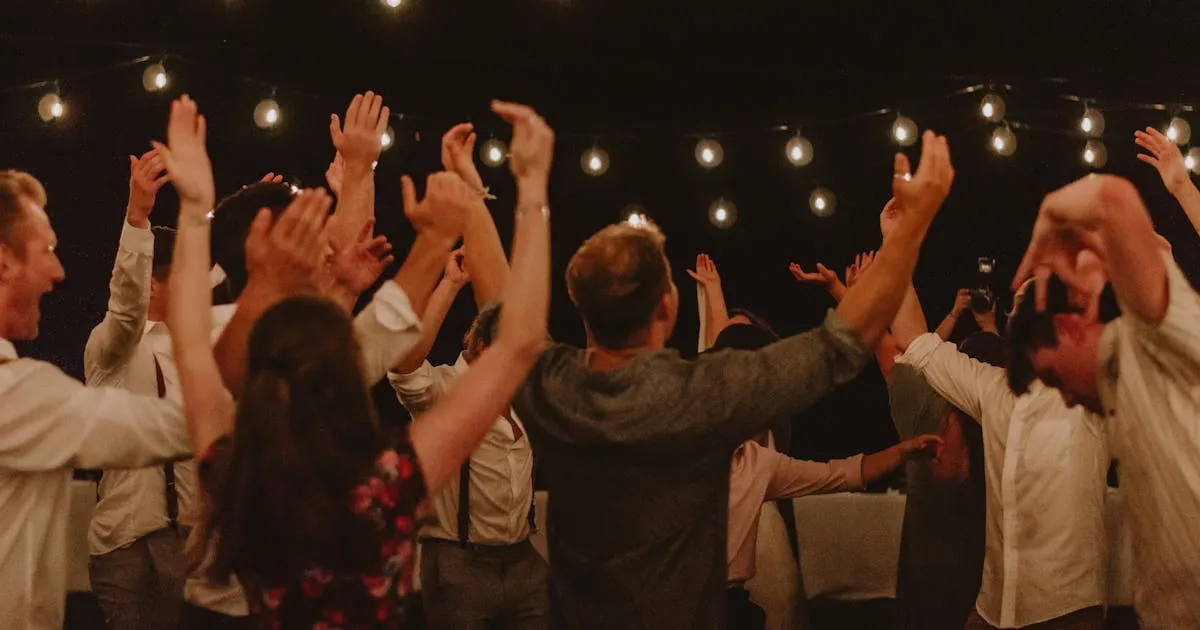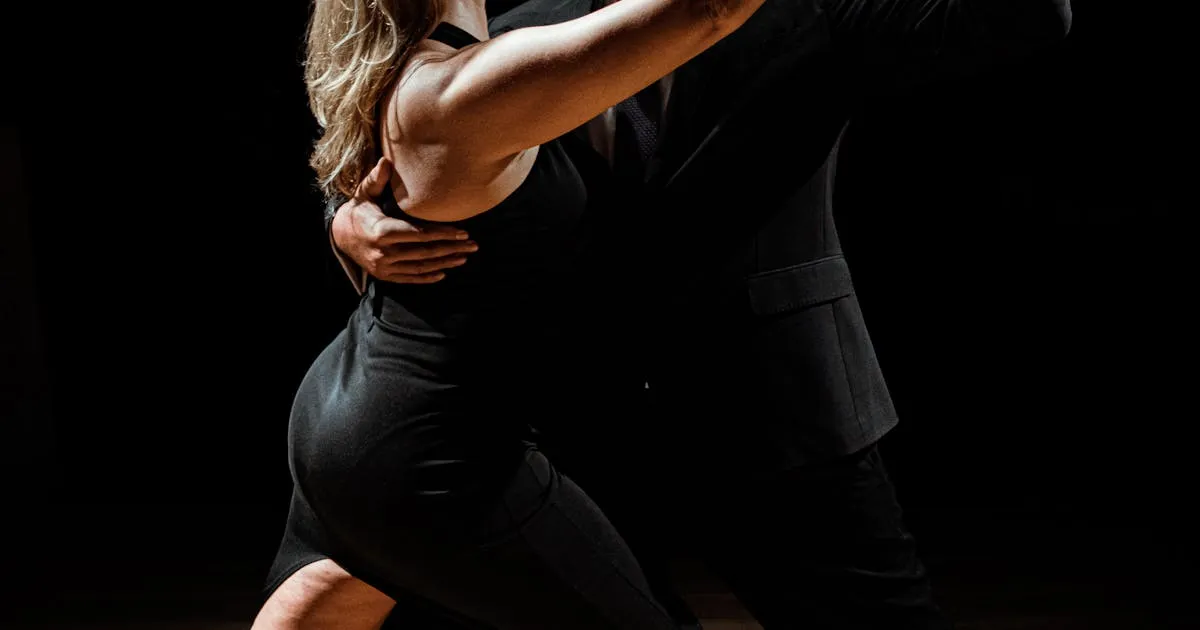
Brazilian Zouk is a partner dance defined by flowing, circular movement and mesmerizing head movements that make it unlike anything else on a social dance floor. When you watch it for the first time, it looks almost impossibly smooth — two bodies moving as one in long, sweeping arcs set to deeply emotional music. It is one of the most expressive social dances in the world, and once you try it, it tends to become an obsession.
Table of Contents
- Origins of Zouk
- The Music
- How Zouk Is Danced
- Styles of Zouk
- Where to Dance Zouk
- Zouk Festivals
- What to Wear
- Getting Started
- Frequently Asked Questions
- Find Zouk Events
Origins of Zouk
The word “zouk” means “party” in Antillean Creole, and the story of the dance starts with the music. Zouk music originated in the French Caribbean islands of Guadeloupe and Martinique in the 1980s. The band Kassav’ was the driving force — their fusion of Caribbean rhythms, funk, and electronic production created a sound that swept across the Francophone world. Zouk music became massive in West Africa, Cape Verde, and especially Brazil.
In the late 1980s, Brazil saw the explosion of Lambada — a fast, hip-driven partner dance that became a global craze after “Lambada” by Kaoma topped charts worldwide in 1989. But the craze was short-lived. The music faded as quickly as it had arrived, and dancers were left with a dance they loved but no new music to dance it to.
What happened next gave birth to Brazilian Zouk. Dancers in Rio de Janeiro, already skilled in Lambada, began adapting their dance to the slower, more melodic zouk music on Brazilian radio. The tempo change was transformative — slower music meant more time for body movement, expression, and the flowing quality that would define the dance. Throughout the 1990s, pioneers like Adilio Porto and Renata Pecanha developed the foundational technique in Rio. Alex de Carvalho was instrumental in codifying and spreading the dance internationally, teaching at congresses around the world.
By the 2010s, Brazilian Zouk had established a global community. International congresses, YouTube videos, and a growing network of teachers brought the dance to cities across Europe, North America, Asia, and Oceania. The community is smaller than salsa or bachata, but deeply connected and passionate.
One important distinction: Caribbean Zouk refers to the music genre created by Kassav’ and others. Brazilian Zouk refers to the partner dance that evolved in Brazil. When dancers today say “zouk,” they almost always mean the Brazilian dance. The dance has long since outgrown its original soundtrack.
The Music
One of the most distinctive things about Brazilian Zouk is that it is not tied to a single genre of music. While salsa dancers dance to salsa music and bachata dancers dance to bachata music, zouk dancers dance to almost anything with the right tempo and feel.
At a zouk social, you will hear R&B, pop remixes, electronic downtempo, acoustic covers, neo-soul, and traditional zouk tracks. The common thread is a slow-to-moderate tempo — typically 80 to 110 BPM — with a smooth, flowing quality that invites continuous movement rather than sharp, percussive hits.
Popular DJs in the zouk scene include DJ Kakah, whose remixes are staples at socials worldwide, DJ Ivo, and Alok, the Brazilian electronic producer whose tracks cross over into the zouk world. You will also hear remixed versions of mainstream artists slowed down and reworked for the zouk floor.
This musical freedom is part of what draws people to zouk. Every DJ brings a different flavor, and the dance becomes a vehicle for interpreting whatever music is playing. If you are coming from salsa or bachata, where the music genre and the dance are tightly coupled, this openness can feel liberating.
How Zouk Is Danced
The defining feature of Brazilian Zouk is its flowing, circular quality. Where salsa moves in sharp, linear patterns and bachata steps side to side, zouk moves in continuous arcs and waves. The movement never really stops — it transitions, redirects, and evolves throughout the song.
The connection is chest-to-chest, similar to Kizomba, but with a wider range of motion. The lead guides the follower primarily through body movement — subtle shifts in weight, chest direction, and core engagement — rather than arm pulls or hand signals. This is why zouk has such a smooth, organic look. The movement originates from the center of the body and ripples outward.
The most iconic element is the head movement, known as the cambre. These are controlled, led movements where the follower’s head and upper body extend backward or to the side, creating the dramatic visual that makes zouk instantly recognizable. From the outside, cambres can look alarming. In practice, they are carefully led and require trust and technique from both partners. The follower is never “thrown” backward — the movement is gradual, supported, and always within the follower’s control.
Body waves are another signature element. Movement ripples through the torso — chest, ribcage, hips — in a continuous wave that follows the music. Lateral movement, circular turns, and constant redirection keep the dance unpredictable and expressive.
Zouk attracts dancers from ballet, contemporary, yoga, and other movement disciplines. The dance rewards body awareness, flexibility, and musicality. But you do not need a dance background to start — the fundamentals are learnable by anyone willing to put in the time.
The follower’s role deserves special mention. This is not a dance where the follower passively waits for instructions. Zouk followers actively interpret the music, add their own styling, and contribute their own expression. The best zouk dances are conversations, not monologues.
Styles of Zouk
Traditional / Rio-Style Zouk (Lambazouk)
This is where it all started. Rio-style zouk preserves the foundational movement patterns that evolved from Lambada in the 1990s. It features strong lateral movements, grounded footwork, and structured turn patterns. The connection tends to be closer and the movement more compact than in modern styles. If you want to understand the roots of Brazilian Zouk, traditional Rio-style is where to begin. It remains the backbone of zouk pedagogy worldwide.
Neo Zouk
Neo Zouk is experimental, freeform, and focused on individual musical interpretation rather than established patterns. Dancers borrow from contemporary dance and contact improvisation to create something highly personal. The connection shifts between close embrace and open hold, and musicality drives everything. Neo Zouk tends to appeal to experienced dancers looking to expand their creative vocabulary.
Flow / Soulzouk
Flow Zouk, sometimes called Soulzouk, strips the dance down to its most essential quality: smooth, uninterrupted body movement. The emphasis is on musicality and internal expression rather than complex patterns or dramatic cambres. It is meditative, deeply connected, and often danced to slower, more atmospheric music. For dancers who are drawn to zouk’s emotional depth and who value the feeling of the dance over the visual spectacle, Flow Zouk is deeply satisfying.
Zouk Moves / Mzouk
Mzouk blends Brazilian Zouk with hip-hop and urban dance elements, creating something more dynamic and athletic than traditional styles. You will see sharper accents, more rhythmic isolations, and a grounded energy that draws from street dance. It appeals to dancers who enjoy a more physical, high-energy interpretation of the music and who want to bring urban movement vocabulary into a partner dance context.
Where to Dance Zouk
Zouk communities tend to be smaller than salsa or bachata scenes, but what they lack in size they make up for in passion and warmth. Zouk dancers tend to know each other, travel to the same events, and look out for newcomers. Walking into a zouk social for the first time, you are more likely to be welcomed and introduced around than at a larger Latin night.
The dance is growing fast. London has one of Europe’s strongest zouk communities with multiple weekly events. Berlin and Amsterdam both have established scenes with regular socials and visiting international instructors. Prague has become a zouk hub in Central Europe.
In North America, New York has a vibrant and well-organized zouk scene, and San Francisco has long been one of the strongest zouk cities in the United States. In the Southern Hemisphere, Melbourne anchors a passionate Australian zouk community.
Browse all zouk events worldwide to find what is happening near you. New socials and classes are appearing regularly as the dance continues its global expansion.
Zouk Festivals
Festival culture is central to the zouk world. Because local scenes can be small, many zouk dancers travel regionally or internationally for congresses. These multi-day events combine intensive workshops with world-class instructors, social dancing into the early morning, and performances. You will meet dancers from dozens of countries and dance with partners whose movement vocabulary is completely different from what you are used to at home. For many zouk dancers, festivals are where the biggest breakthroughs happen.
Some festivals to have on your radar: the Xplosion Berlin Zouk Festival is one of Europe’s top zouk events. The Prague Zouk Congress draws a strong international crowd. In the United States, the Elevation Zouk Festival in Denver has established itself as a premier North American event. Casa do Zouk on the Gold Coast is a key event for the Australasian scene. And the Bali Zouk Retreat combines dancing with a tropical setting that draws zouk dancers from around the world.
Festival passes typically include workshops and social parties, ranging from 100 to 250 euros depending on the event and how early you register. Many festivals offer social-only passes if you just want the parties. Browse upcoming events on our festivals page.
What to Wear
Zouk involves a wider range of body movement than most social dances, so your clothing needs to accommodate that. The cambres and body waves require freedom through the torso, shoulders, and hips.
Clothing: Stretchy, fitted fabrics work best. Followers often wear tops that stay securely in place during head movements — nothing that will shift or ride up when your upper body extends backward. Fitted tank tops, dance crops, or stretchy long-sleeve shirts are popular. Leggings, fitted jeans, or dance pants all work well. Leaders tend to wear fitted t-shirts or stretchy button-downs with comfortable pants.
Shoes: Smooth-soled shoes are essential. Dance sneakers, jazz shoes, or any shoe with a suede or leather sole will work. Many zouk dancers prefer flat shoes — the circular movement and lateral steps feel more stable without a heel, especially when starting out. Heels are optional for followers. Some dancers even dance in socks on smooth floors. Avoid rubber soles — they grip the floor and make turning painful. For detailed recommendations, check our guide to the best dance shoes.
Bring a spare shirt if you tend to sweat, and change into your dance shoes at the venue to keep the soles clean.
Getting Started
Take a beginner workshop in person. This is the single most important piece of advice. Unlike bachata, where you can learn the basic step from a video and survive a social, zouk’s connection and head movements require hands-on instruction. The cambre needs to be taught safely — how to lead it, how to follow it, and how to protect your neck. YouTube is great for inspiration, but it is not a substitute for a real class.
Trust your partner. The head movements look dramatic and can feel vulnerable at first. In a beginner class, the movements will be small and gentle. The trust builds quickly once you understand that the cambre is a led, gradual movement — not a sudden drop.
Be patient with yourself. Zouk has a steeper initial learning curve than bachata or salsa. Most dancers say it takes three to six months of regular classes and socials to feel comfortable on the zouk floor. The dancers who look effortless have been at it for years.
Start attending socials early. Even if you only know the basic step, dancing with different partners and being in the social environment teaches you things that classes alone cannot. Let people know you are new — zouk dancers are welcoming to beginners and will adjust their dancing to your level.
Look for “zouk intro” nights. Many zouk communities run beginner-friendly events designed to welcome new dancers. These are lower pressure than a regular social and a perfect entry point.
Frequently Asked Questions
Is Zouk hard to learn? The basic step is accessible — most people pick it up in their first class. But the body movement, connection, and head movements take real practice. Zouk asks more of your body awareness than bachata or salsa from the start. Expect three to six months of regular practice before you feel comfortable at a social. That said, every class builds on the last, and the learning curve is part of what makes zouk so rewarding.
What is the difference between Zouk and Bachata? Different origins, different music, different movement quality. Bachata originated in the Dominican Republic and is danced to guitar-driven music in a rhythmic side-to-side pattern. Brazilian Zouk evolved in Brazil from Lambada and is danced to a wide range of genres in flowing, circular patterns. The most visible difference is zouk’s signature head movements (cambres), which do not exist in bachata. Bachata feels grounded and rhythmic; zouk feels fluid and continuous. Many dancers enjoy both.
Is Zouk a sensual dance? Zouk involves close connection and expressive body movement, which many people perceive as sensual. The dance is intimate in the same way that Argentine tango or Kizomba are intimate — it requires trust and physical closeness. But the focus is on musical expression and connection, not romance. Social dance etiquette applies: respect your partner’s boundaries, and never assume that connection on the floor means anything beyond a shared love of the dance. Zouk communities take consent seriously.
Do I need a partner for Zouk? No. Zouk socials are designed for people to come individually and rotate partners. Dancing with many different partners is how you improve fastest — each partner moves differently, and adapting builds your skills. Zouk communities are tight-knit and welcoming to newcomers. Show up alone to your first social, and you will likely leave with new friends.
What shoes should I wear for Zouk? Smooth-soled shoes that let you pivot and turn freely. Dance sneakers, jazz shoes, or any shoe with a suede or leather sole work well. Flat shoes are popular for zouk — the circular movement feels more stable without a heel. Heels are optional for followers. Some dancers wear socks on smooth floors. Avoid rubber soles — they grip the floor and make turning painful. For specific recommendations, see our shoe guide.
Find Zouk Events
Ready to try zouk? Browse zouk events worldwide to find socials and workshops near you. Check our city pages for London, Berlin, Amsterdam, New York, San Francisco, Melbourne, or Prague to find local events. For upcoming congresses, browse our festival listings. And if you are exploring other styles, our guide to Kizomba covers another connection dance that many zouk dancers also enjoy.