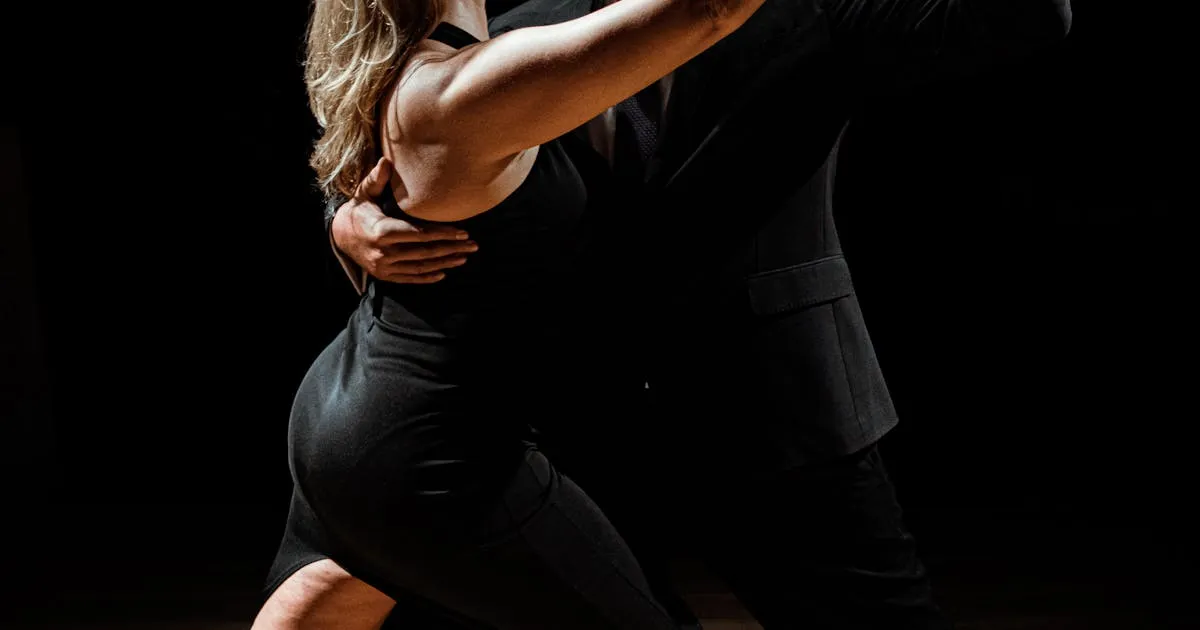
Brazilian Zouk: The Flowing Foundation
Brazilian Zouk is one of the most visually captivating partner dances in the world. Born in the 1990s in Rio de Janeiro and São Paulo, it evolved from Lambada — the "forbidden dance" that swept through Brazil in the late 1980s before its musical craze faded. When Lambada's chart-topping hits disappeared from the radio, the dancers didn't stop. They adapted, finding new music and refining a movement vocabulary that would become its own distinct art form.
How It Came to Be
In the early 1990s, Brazilian dance teachers like Adílio Porto and Renata Peçanha began experimenting with Lambada's core movements — its close connection, circular walks, and hip-driven motion — but set them to different music. R&B, pop remixes, and eventually a growing catalog of dedicated Zouk tracks gave the dance room to breathe and slow down. The result was something smoother, more grounded, and infinitely more expressive than its Lambada ancestor. By the early 2000s, Brazilian Zouk had its own identity, its own competition circuit, and a rapidly growing international following.
What Makes It Unique
The signature of Brazilian Zouk is flow. Everything in the dance prioritizes continuous, unbroken movement — from the sweeping circular patterns the couple traces on the floor to the fluid body waves that ripple through the follower's torso and into dramatic head movements. The lead-follow connection tends to be close, often chest-to-chest, which allows the leader to guide subtle weight shifts and directional changes with precision.
Head movements are perhaps what most people notice first. The follower's head rolls, dips, and arcs in ways that look impossibly relaxed, tracing smooth circles and figure-eights that follow the momentum the leader initiates. These movements are never forced — when done well, they're a natural extension of the body's wave.
The Music
Brazilian Zouk is danced to a wide range of music, which is part of its appeal. Dedicated Zouk tracks typically feature a steady, mid-tempo beat around 80-100 BPM with lush, melodic arrangements. But you'll also hear remixes of pop songs, R&B, and even acoustic covers on social dance floors. The common thread is a smooth, rolling rhythm that invites body movement rather than sharp footwork.
Where to Find It
Brazil remains the heartland, with massive scenes in São Paulo, Rio de Janeiro, and Belo Horizonte. But Brazilian Zouk has gone thoroughly global. Europe is a stronghold — particularly Germany, the Netherlands, Spain, and Poland. Australia, Southeast Asia, and North America all have active and growing communities. Major international festivals attract thousands of dancers annually.
How It Differs from Other Zouk Styles
Compared to Lambazouk, Brazilian Zouk is slower and more grounded. Where Lambazouk preserves Lambada's athletic energy — fast turns, dramatic dips — Brazilian Zouk favors sustained connection and smooth transitions. Compared to Neo Zouk, Brazilian Zouk stays closer to its traditional vocabulary: the circular patterns, the classic body waves, the established lead-follow framework. It's the foundation that the other styles build on, reinterpret, or push against.