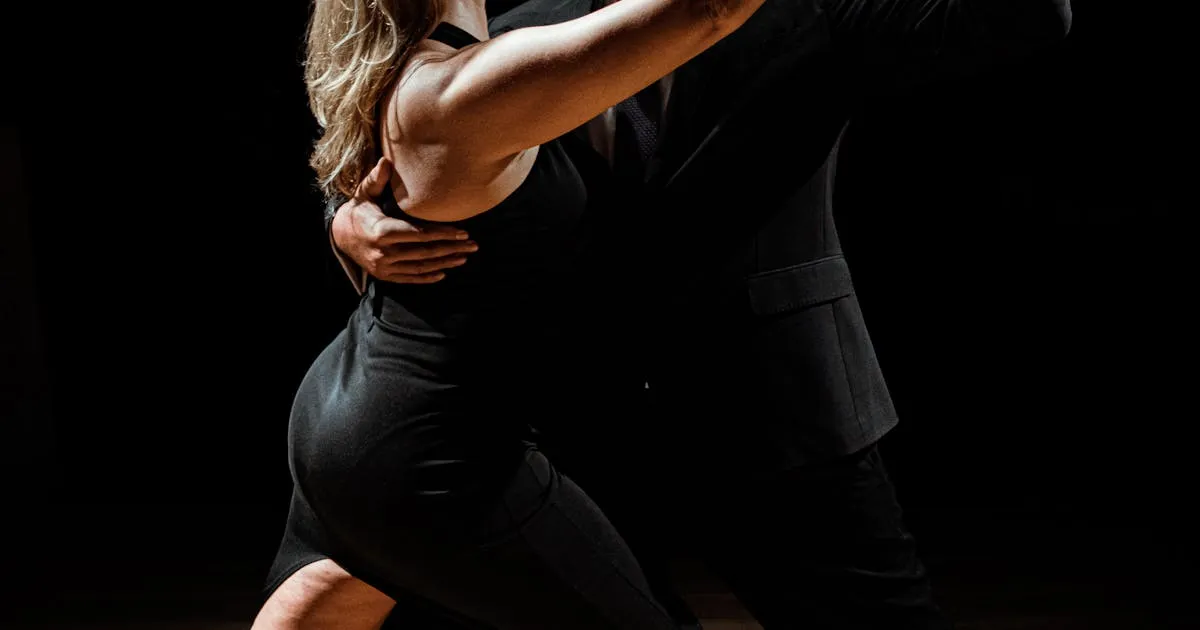
Lambazouk: Where Lambada Lives On
Lambazouk is the bridge between two eras of Brazilian partner dance. It carries the explosive energy and athletic flair of Lambada — the worldwide sensation of the late 1980s — into the modern Zouk framework. If Brazilian Zouk is the smooth, meditative evolution of Lambada, Lambazouk is the version that refused to let go of the fire. It's faster, bolder, and unapologetically dynamic.
Roots in the Lambada Explosion
To understand Lambazouk, you need to understand Lambada. In 1989, the song "Lambada" by Kaoma became one of the best-selling singles in history, and practically overnight the dance was everywhere — from nightclubs in Belém and Porto Seguro to TV shows across Europe. Lambada the dance was characterized by fast spins, deep hip movements, close body contact, and a joyful, almost reckless energy. But by the early 1990s, the musical fad collapsed as quickly as it had risen.
Many dancers transitioned to what would become Brazilian Zouk, softening the movements and finding new music. But a group of dancers and teachers — many of them originally from the northern Brazilian cities where Lambada had its deepest roots — wanted to preserve that original intensity. The term "Lambazouk" emerged to describe this hybrid: Lambada's spirit expressed through Zouk's broader musical palette.
Movement and Character
Lambazouk is defined by speed and showmanship. The footwork is faster and more intricate than in standard Brazilian Zouk, often incorporating quick directional changes, syncopated steps, and rhythmic variations that demand sharp musicality from both partners. Spins are a centerpiece — rapid, multi-rotational turns that require strong technique and a clear lead-follow connection to execute safely.
The dance also features more acrobatic elements than its smoother cousin. Dips, leans, and counterbalance moves are common, and skilled partnerships often incorporate aerial-inspired movements. Body waves and head movements are still present, but they tend to be quicker and more punctuated rather than the long, flowing arcs of Brazilian Zouk.
The Music
Lambazouk draws from a broader and more upbeat musical palette. You'll hear Lambada classics and modern remixes, but also Caribbean Zouk, kizomba-influenced tracks, and energetic Latin-fusion productions. The tempo tends to sit higher than typical Brazilian Zouk tracks — often 100-120 BPM or more — and the rhythms reward dancers who can play with speed, accents, and sudden breaks in the music.
Where It Thrives
Lambazouk has strong roots in northern Brazil, particularly in cities like Belém, Recife, and Porto Seguro, where Lambada's original culture never fully disappeared. In Europe, it has a dedicated following in Spain, France, and Portugal. Internationally, you'll find Lambazouk workshops at most major Zouk congresses, though dedicated Lambazouk events are rarer than general Zouk festivals.
How It Stands Apart
The easiest way to distinguish Lambazouk from Brazilian Zouk is tempo and attitude. Brazilian Zouk seeks smoothness and continuous flow; Lambazouk seeks excitement and dynamic contrast. Where Brazilian Zouk might guide you through a slow, rolling body wave, Lambazouk snaps you into a triple spin and drops you into a dramatic lean. Compared to Neo Zouk, Lambazouk is far more rooted in traditional partner dance structure — it's athletic and showy, but it doesn't borrow from contemporary dance or break the established lead-follow roles.