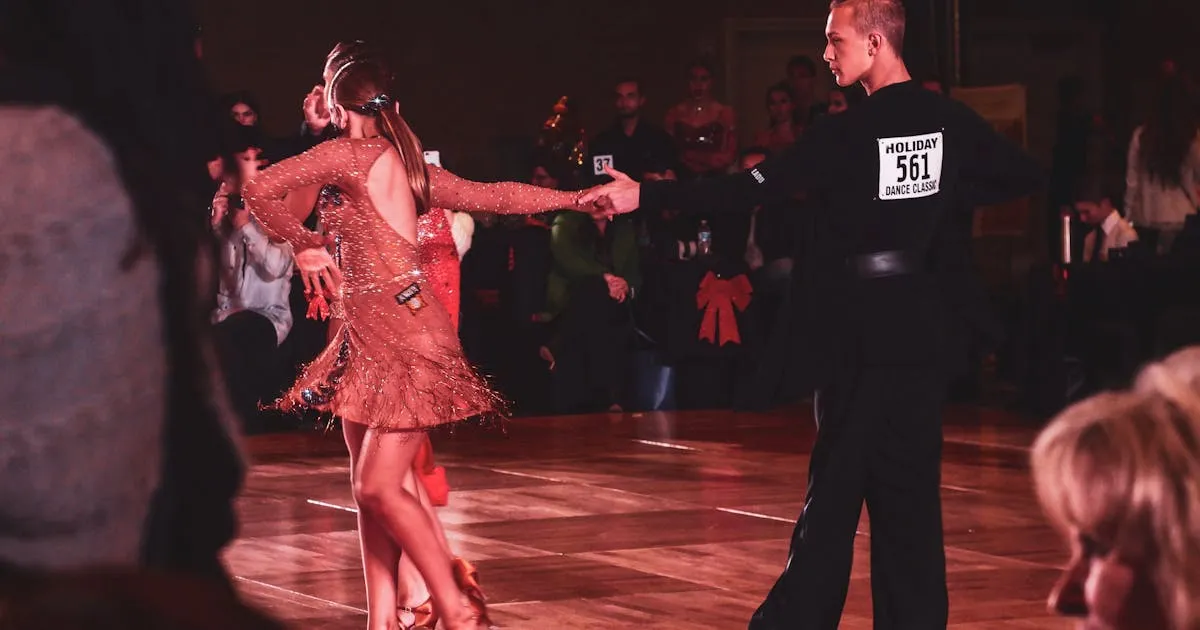
Europe has a thriving salsa scene with hundreds of weekly socials, annual congresses, and passionate communities. Whether you are traveling for work or planning a dedicated dance holiday, this guide breaks down the best destinations for salsa dancers in 2026. Every city listed here has been visited and evaluated based on the quality of its socials, the variety of styles on offer, and how welcoming the community is to visiting dancers.
Table of Contents
- London, United Kingdom
- Berlin, Germany
- Paris, France
- Barcelona, Spain
- Amsterdam, Netherlands
- Honorable Mentions
- Festivals Worth Traveling For
- Planning a Dance Trip
- FAQ
London, United Kingdom
London is the undisputed salsa capital of Europe. No other city on the continent comes close in sheer volume: socials run every night of the week, often multiple events on the same evening in different parts of the city. On a typical Saturday you might choose between three or four separate parties, each with its own flavor and crowd.
Style mix: Cuban salsa (Casino and Rueda) has a strong presence, particularly around Camden and North London. LA-style On1 dominates the larger congress-style events, and there is a dedicated New York-style On2 community with specific nights throughout the week. You can dance every style of salsa in London without trying very hard.
Best nights and neighborhoods: Friday and Saturday are the big nights, but do not overlook midweek. Tuesday and Wednesday socials attract more experienced dancers and feel less crowded. The scene spans Hammersmith, Elephant and Castle, Angel, and Camden. If you only have one night, aim for a Friday or Saturday event in central or south London.
Festivals: The London Salsa MarathonFest is one of the year’s highlights, drawing international performers and social dancers for a weekend of non-stop dancing. The event has grown considerably over the past five years and is now a fixture on the European salsa calendar.
Practical tip: London is expensive, but most socials charge between eight and fifteen pounds at the door, which usually includes a class beforehand. Many venues are accessible by Tube, so you do not need a car.
Find all salsa events in London.
Berlin, Germany
Berlin’s salsa scene punches well above its weight. The city draws a young, international crowd, and that energy carries onto the dance floor. The scene is smaller than London or Paris, but what it lacks in size it makes up for in character. Dancers here are genuinely warm, which makes Berlin one of the best cities for a visiting dancer who does not want to feel like an outsider.
Style mix: LA-style On1 is the most common style, but Cuban salsa has a dedicated following with specific nights catering to Casino dancers. Most events mix in bachata sets as well. For the full picture, our complete guide to salsa dancing in Berlin goes into much more detail.
Best nights and neighborhoods: Tuesday and Wednesday are the classic salsa nights and draw the most consistent crowds. The scene centers around Mitte and Kreuzberg, with events in Prenzlauer Berg and Neukolln. Venues range from dedicated studios to atmospheric ballrooms that give Berlin its distinctive charm.
Festivals: The Berlin SalsaCongress is the city’s flagship event, bringing together top instructors and performers for a full weekend of workshops, shows, and social dancing. It attracts dancers from across Germany and neighboring countries.
Practical tip: Berlin is one of the most affordable major cities in Western Europe for dancers. Door prices are typically between five and ten euros, and the city’s excellent public transport runs late on weekends, making it easy to get home after a late-night social.
Find all salsa events in Berlin.
Paris, France
Paris combines old-world elegance with serious Latin energy. The scene is one of the largest in Europe, supported by well-established dance schools that feed a steady stream of dancers into the social scene. If you want a city where the overall level of dancing is consistently high, Paris delivers.
Style mix: Cuban salsa (Casino) has an especially strong following here — arguably the strongest of any major European city. Dedicated Cuban nights with live timba bands feel completely different from the LA-style congress events. LA-style On1 is also well represented, and the two communities coexist with their own distinct nights. New York-style On2 has a smaller but passionate following.
Best nights and neighborhoods: The areas around Bastille, Republique, and the Latin Quarter are reliable for finding socials. Friday and Saturday offer the biggest events, but there are options every night. In summer, outdoor salsa along the banks of the Seine is an experience every salsa dancer should have at least once.
Festivals: The Paris International Salsa Congress (PISC) is a major draw, featuring international artists and packed social floors. It pulls dancers from all over France and beyond.
Practical tip: French salsa communities can feel a bit cliquey at first compared to cities like Berlin or Amsterdam. Do not be discouraged — once you get on the floor and dance, people open up quickly. A few words of French go a long way in breaking the ice.
Find all salsa events in Paris.
Barcelona, Spain
Barcelona is a natural home for salsa. Large Latin American communities — from Colombia, Cuba, Ecuador, and the Dominican Republic — have built a scene that feels authentically rooted. Add year-round warm weather, a culture that embraces late nights, and a flow of international visitors, and you get one of Europe’s most vibrant dance cities.
Style mix: You will find every style here, but the Latin American influence means Cuban salsa and Colombian-style salsa have a strong grassroots presence. LA-style On1 dominates the larger organized events and congresses. The blending of styles at Barcelona socials gives the floor a raw, eclectic energy that is hard to replicate in cities further north.
Best nights and neighborhoods: The scene runs every night, but Thursday through Sunday is when Barcelona truly comes alive for salsa. Events regularly run past 3 AM, sometimes later — this is Spain, after all. The neighborhoods of Eixample, El Born, and Gracia all have regular events. The beachfront area of Barceloneta occasionally hosts outdoor salsa in summer, which is worth seeking out.
Festivals: Barcelona hosts several congresses throughout the year, making it a reliable destination no matter when you visit. The city’s position as a major tourist hub means these events attract strong international lineups.
Practical tip: If you are coming from Northern Europe, be prepared for the schedule. Socials in Barcelona start later and end later than what you might be used to. A party advertised as starting at 10 PM will not have a full floor until midnight. Adjust your body clock accordingly.
Find all salsa events in Barcelona.
Amsterdam, Netherlands
Amsterdam’s salsa scene is compact but high-quality. The community is tight-knit, and visiting dancers are genuinely welcomed — people introduce themselves, ask where you are from, and make an effort to dance with newcomers. For a solo traveling dancer, this matters more than scene size.
Style mix: LA-style On1 dominates Amsterdam socials, with bachata mixed into most events. Cuban salsa has a smaller but dedicated following with specific nights. The overall level is solid — the Netherlands has a strong workshop culture, and many dancers regularly attend intensives.
Best nights and neighborhoods: The main socials happen Thursday through Saturday. The city center and Leidseplein area have the most convenient venues. Amsterdam is small enough that you can reach any event by bike or tram — a luxury compared to sprawling cities like London or Paris.
Festivals: Amsterdam’s central location in Europe makes it a natural hub for festival-goers. The Dutch salsa community is well connected with scenes in Belgium, Germany, and the UK, and there is regular cross-pollination between these countries at weekend events.
Practical tip: The Dutch scene connects seamlessly with neighboring countries. If you are based in Amsterdam for a week, it is easy to take a train to a weekend event in Cologne, Brussels, or even Paris. Think of Amsterdam as a base camp for European salsa travel.
Find all salsa events in Amsterdam.
Honorable Mentions
Zurich, Switzerland
Switzerland has a surprisingly active salsa scene, and Zurich is its beating heart. Despite the city’s reputation for being reserved, the dance community is warm and sociable. Multiple weekly socials run throughout the week, and the overall standard of dancing is high — the Swiss workshop culture means dancers invest seriously in their technique. Zurich is expensive, but if you are already visiting for work or travel, the salsa scene is absolutely worth exploring.
Find all salsa events in Zurich.
Lisbon, Portugal
Lisbon is best known as Europe’s kizomba capital, but the salsa scene here is genuinely strong in its own right. The city’s proximity to Latin America — both culturally and through its Brazilian community — gives the scene an authentic energy. Cuban salsa and LA-style both have dedicated followings. The combination of affordable prices, beautiful weather, and a relaxed atmosphere makes Lisbon one of the most enjoyable European cities for a dance trip. Many dancers come for kizomba and discover a salsa scene that surprises them.
Find all salsa events in Lisbon.
Warsaw, Poland
Poland’s salsa scene has been growing rapidly over the past decade, and Warsaw is leading the charge. The city now has multiple weekly socials, dedicated dance schools, and a community that is hungry to learn and improve. LA-style On1 dominates, and the overall energy at Warsaw events is enthusiastic and welcoming. Prices are significantly lower than in Western Europe, making it an excellent budget-friendly dance destination.
Find all salsa events in Warsaw.
Krakow, Poland
Krakow complements Warsaw with its own distinct scene. The city is smaller and more intimate, but the salsa community is active and growing. The old town’s atmospheric venues add a special character to dance nights. If you are visiting Poland, combining a few days in Warsaw with a weekend in Krakow gives you a full picture of the country’s emerging scene.
Find all salsa events in Krakow.
Rome, Italy
Italian passion translates beautifully to the dance floor. Rome’s salsa scene is lively, with multiple weekly events and a community that dances with genuine feeling and expression. The Romans bring their characteristic warmth and sociability to the floor, making it easy to connect with partners even if your Italian is limited. Summer rooftop socials are a Roman specialty.
Find all salsa events in Rome.
Festivals Worth Traveling For
European salsa festivals pack workshops, performances, and marathon social dancing into a single weekend. Here are the ones worth building a trip around in 2026:
Berlin SalsaCongress - Jungle Edition — Berlin’s flagship salsa event brings together top international instructors and performers. The themed editions add a fun visual element, and the social dancing runs deep into the night.
London Salsa MarathonFest — Celebrating five years in 2026, this marathon-format event is built around extended social dancing rather than performances. If you love dancing more than watching, this is your event.
Paris International Salsa Congress (PISC) — One of the most polished congresses in Europe, with world-class artists and a huge social floor. Paris as a backdrop does not hurt either.
Croatian Summer Salsa Festival, Rovinj — This one breaks the city mold entirely. A beach-side salsa festival on the Croatian coast combines serious dancing with a holiday atmosphere. Open-air dance floors, Mediterranean weather, and a week-long format make it one of Europe’s most unique salsa experiences.
Cologne Salsa Congress — Germany’s second major salsa congress draws a strong crowd from across the Rhine-Ruhr region and beyond. A well-organized event with consistently good social floors.
For a complete list of upcoming events, browse our festival calendar.
Planning a Dance Trip
A successful salsa trip comes down to preparation and timing. Here are the tips that make the difference.
Check current schedules. The European salsa scene is dynamic — venues close, nights move. Always check our salsa event listings for the most current information before you travel.
Pack the right shoes. Dance floors vary from polished wood to rough concrete. Suede-soled shoes are essential. Our guide to the best salsa dancing shoes covers what to look for.
Time your trip around festivals. Building your trip around a major festival guarantees a critical mass of dancers and energy. Festivals also connect you with dancers from other cities who can recommend their local scenes.
Consider multi-city itineraries. Europe’s train and budget airline networks make it easy to combine cities. A London-Paris-Amsterdam loop is doable in ten days. Berlin-Warsaw is another natural pairing for Western and Eastern European scenes.
Learn a few words in the local language. A “merci” in Paris or a “danke” in Berlin goes a long way. Most European dancers speak English, but the effort is appreciated.
Arrive early, stay late. In London and Berlin, socials start with a class at 8 PM and floors fill by 10 PM. In Barcelona and Rome, nothing gets going until midnight. Adjust to the local rhythm.
Budget wisely. Door prices range from five euros in Warsaw to fifteen pounds in London. Festivals can cost anywhere from fifty to two hundred euros for a full pass. The biggest expense is usually accommodation and transport, not the dancing itself.
FAQ
What is the best city in Europe for salsa beginners?
Berlin and Amsterdam are both excellent choices for beginners. The communities in these cities are particularly welcoming to newcomers, the scenes are manageable in size, and most socials include a beginner-friendly class before the social dancing starts. London has more options overall, but the sheer scale can be overwhelming if you are just starting out.
When is the best time of year to go on a salsa trip in Europe?
Spring (April to June) and autumn (September to November) are the sweet spots. The weather is pleasant for traveling, the regular weekly scene is in full swing, and major congresses tend to cluster in these months. Summer can be quieter in some cities as locals go on holiday, though summer festivals — especially the Croatian Summer Salsa Festival in Rovinj — more than compensate.
Do I need a partner to attend salsa socials in Europe?
No. European salsa socials are designed for people who come alone. The culture of asking strangers to dance is deeply ingrained — it is expected and encouraged. Solo travelers make up a significant portion of the floor at any given social. If you are nervous about going alone, arrive during the pre-social class when the atmosphere is more structured and introductions happen naturally.
What is the difference between Cuban salsa and LA-style salsa?
Cuban salsa (Casino) is danced in a circular motion with a relaxed, grounded feel, emphasizing body movement and musicality. LA-style (On1) is danced in a linear slot with more dramatic spins and a polished look. Both are popular across Europe — Paris and Barcelona lean Cuban, while Berlin and Amsterdam lean LA-style. Most dancers are comfortable with both. If you are curious about other Latin dances you might encounter at these events, our guide to bachata dancing is a good starting point.